Dive slate · divesites.com.au · printed 7 Nov 2026
Sanyo Maru
East Arnhem Land & Gove, Northern Territory · near Maningrida
| Depth | Max 26 m |
|---|---|
| Minimum level | Deep/Advanced + experience |
| Difficulty | Advanced |
| Access | Boat (multi-day/liveaboard) |
| Entry | Not permitted without Heritage Branch permission |
| Current | Variable/Tidal |
| Water | summer 30-32 °C, winter 24-26 °C |
| Suit | 3 mm shorty or full lycra/stinger suit; full-length stinger suit essential October-May |
| Best season | May-October dry season on neap tides (smallest tidal range, best visibility, south-east trade winds are strongest mid-morning) |
| Position | not published |
| Permit | 200 ha declared protected zone (closed water); NT Heritage Branch permission required. Northern Land Council permits for the adjacent coast. |
| Nearest chamber | Royal Darwin Hospital hyperbaric medicine unit (Tiwi, Darwin) – aeromedical evacuation required |
| Emergency | 000 · DAN Asia-Pacific diving emergency 1800 088 200 |
Sanyo Maru
Also known as Sanyo Maru pearling mother-ship
A 1937 Japanese pearling mother-ship in 26 m off Arnhem Land – archaeologically significant and inside a closed 200 ha protected zone.
Near Maningrida · East Arnhem Land & Gove, Northern Territory
- Depth
- Max 26 m
- Minimum level
- Deep/Advanced + experience
- Access
- Boat (multi-day/liveaboard)
- Boat ride
- —
- Water
- 30-32 °C
- Visibility
- —
Sanyo MaruMax 26 m · Deep/Advanced + experience
Dive factsDepths, conditions, location & safety
Season
Off-peak nowBest months: May, June, July, August, September, October.
May-October dry season on neap tides (smallest tidal range, best visibility, south-east trade winds are strongest mid-morning)
- Best months
- Now (November)
- Stinger suit Nov–May
Dive facts
- Depth
- Max 26 m
- Typical depth
- 26 m
- Certification
- Deep/Advanced + experience
- Difficulty
- Advanced
- Depth tier
- Advanced Open Water (18–30 m)
- Access
- Boat (multi-day/liveaboard)
- Dive centre needed
- Yes – permit/guide required
- Shore / independent
- No
- Current
- Variable/Tidal
- Water temp (summer)
- 30-32 °C
- Water temp (winter)
- 24-26 °C
- Water
- Tropical
- Dive traffic
- Remote/expedition only
- Night dive
- No
- Snorkel friendly
- No
Exposure suit
3 mm shorty or full lycra/stinger suit; full-length stinger suit essential October-May
Location
Off Maningrida · Arnhem Land – central coast
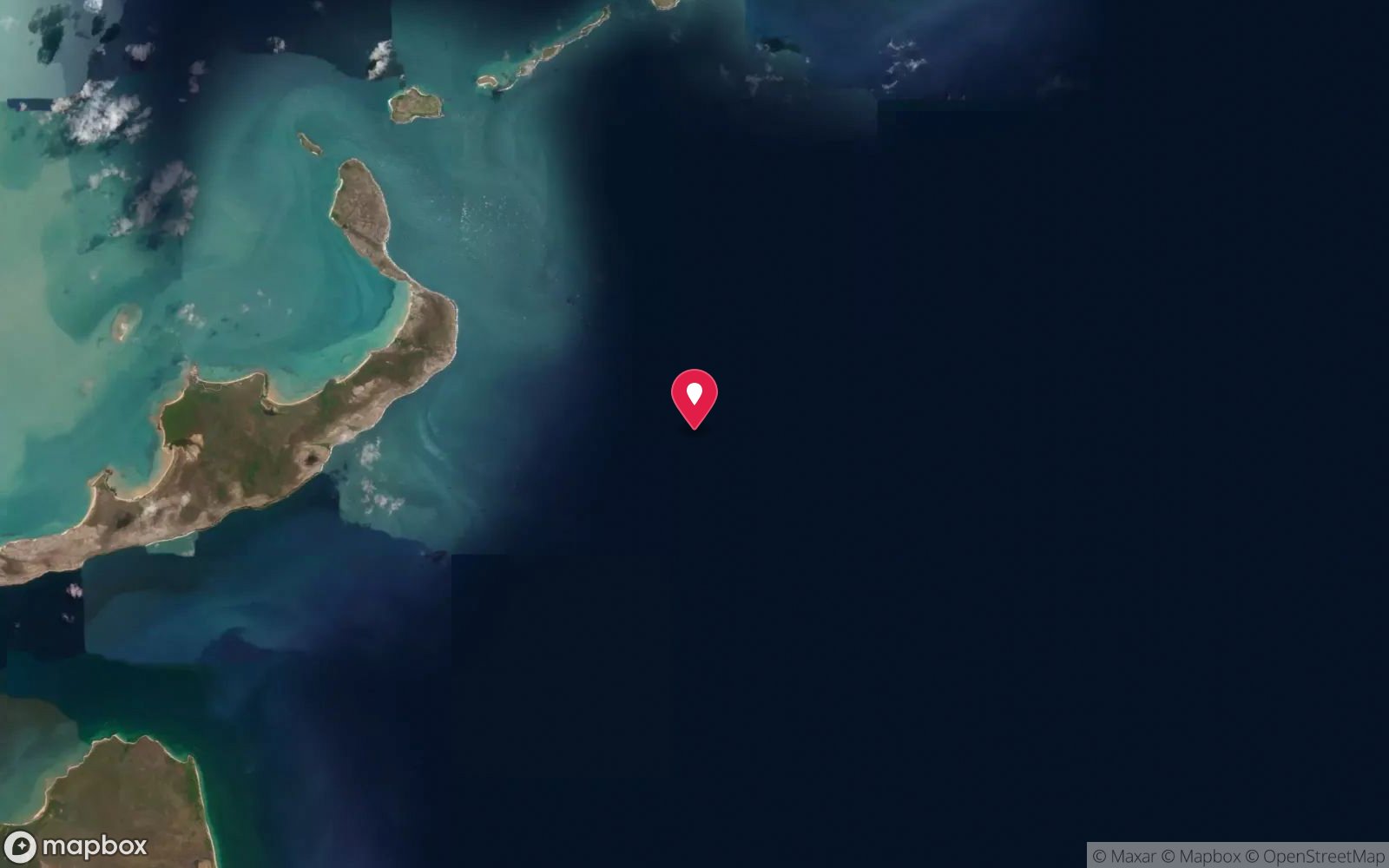
No published coordinates. The map above shows the general area, estimated from documented sites across the East Arnhem Land & Gove region.
Primary source: sea.museumMarine park & permits
200 ha declared protected zone (closed water); NT Heritage Branch permission required. Northern Land Council permits for the adjacent coast.
Nearest recompression chamber
Royal Darwin Hospital hyperbaric medicine unit (Tiwi, Darwin) – aeromedical evacuation required
Diving emergency: call 000, then DAN AP 1800 088 200.
Trip planner
Build a trip around Sanyo Maru →
A day-by-day plan for East Arnhem Land & Gove with this site locked in.
This guide is a planning aid. Conditions change daily — confirm with a local dive centre and dive within your training. Data & safety notes.
Dive profile
How this site rates
Scores are computed from the recorded data, not opinions. How?
At a glance
Sanyo Maru is a wreck liveaboard-only site in East Arnhem Land & Gove, NT, to a maximum of 26 m, suited to Deep/Advanced + experience divers, variable/tidal current.
Rated advanced because of depth beyond 18 m, tidal current that must be timed.
Why dive here
- A 1937 Japanese pearling mother-ship in 26 m off Arnhem Land – archaeologically significant and inside a closed 200 ha protected zone.
- Sunk in 1937 (Japanese pearling mother-ship, c. 36 m); protected as underwater cultural heritage, so look but do not touch.
- Rarely dived: expect to have the site to yourself, and plan your own logistics.
Conditions to avoid
- Cyclone season (roughly December–April)
- Stinger season without a full suit (November–May)
About Sanyo Maru
The Sanyo Maru was a Japanese pearling mother-ship of about 36 m that supported a fleet of pearling luggers working the Arnhem Land coast in the 1930s, when Japanese crews dominated northern Australia's pearl-shell industry. On 1 July 1937 she sank in a sudden squall, reportedly dangerously overloaded; two people died. Much of her cargo was salvaged in the late 1930s and her location was then forgotten.
The wreck was rediscovered around 2012 – historical records and Aboriginal researchers provided a key clue, and the Navy located the site – and it was subsequently investigated by maritime archaeologists with support from Paspaley, Bhagwan Marine and the Western Australian Museum. She lies in about 26 m. Around 70 artefacts were recovered, including ceramic bowls, bottles, lacquerware, surgical kits, personal items, diving equipment and a shell-encrusted glass lantern, and these formed an exhibition at the Australian National Maritime Museum in 2022.
In 2013 the Australian Government declared a 200 ha protected zone around the wreck under the Historic Shipwrecks Act, and it is one of three NT closed-water protected zones alongside Florence D and I-124. Entry requires permission from the NT Heritage Branch.
The Sanyo Maru is historically important as one of the few physical remains of the Japanese pearling era off Arnhem Land and its links with Yolŋu communities. It is not a recreational dive site; it is listed here so divers know it exists and that it is closed. The best way to see the site is through the museum collection and published archaeological reports, which document the daily life of the Japanese crews and the pearling economy that once linked Broome, Darwin, Thursday Island and Arnhem Land.
Wreck details
Japanese pearling mother-ship, c. 36 m · Sunk 1937 · Protected historic shipwreck
Era: early 20th century. Oldest wrecks · Wartime wrecks · Scuttled warships
Other wrecks of the same era
- SS Mauna Loa · Max 20 m · Darwin Harbour
- SS Zealandia · Max 22 m · Darwin Harbour
- USAT Meigs · Max 18 m · Darwin Harbour
- British Motorist · Max 20 m · Darwin Harbour
- Don Isidro · Depth not published · Tiwi Islands
- Florence D · Max 16 m · Tiwi Islands
Getting there & entry
Japanese pearling mother-ship lost in a storm in 1937, lying in 26 m about 30–60 km off the central Arnhem Land coast near Maningrida, inside a 200 ha protected zone.
The wreck lies off the central Arnhem Land coast, about 300 miles north-east of Darwin and some 60 km from Maningrida. The surrounding 200 ha protected zone is closed water – entry requires NT Heritage Branch permission – and the adjacent coast is Aboriginal land requiring Northern Land Council permits. There is no recreational access; archaeological teams reach it on expedition vessels.
Entry: Not permitted without Heritage Branch permission
Weather, swell & tides
Open Arafura Sea off Arnhem Land. Archaeological work has been done in the dry season on calm, neap-tide days. The site is closed to recreational divers; The central Arnhem Land coast is affected by the Liverpool and Blyth river outflows, so visibility is best late in the dry season.
South-east trades blow strongly from May to September and can make the Arafura Sea rough by midday; the wet-season monsoon, cyclones (November–April) and box jellyfish apply to any visit.
Best season: May-October dry season on neap tides (smallest tidal range, best visibility, south-east trade winds are strongest mid-morning)
How the dive is usually run
Not applicable – closed site.
Marine life
- Not documented for recreational purposes
Linked species have their own page listing every site where they are recorded. All marine life →
Training required
Beyond 18 m an Advanced certification (which includes a deep dive to 30 m) is the accepted minimum. Anything past 25 m is a deep dive in practice.
At more than 25 m this counts as a deep dive: watch no-decompression limits and gas.
Courses that help here
- Enriched Air Nitrox – Longer no-decompression time at 25 m and deeper.
Depth tiers: 0–10 m easy · to 18 m Open Water · 18–30 m Advanced (25 m+ is a deep dive) · 30–40 m Deep specialty · 40 m+ technical. All courses
Hazards & warnings
CLOSED WATER – 200 ha protected zone; entry without NT Heritage Branch permission is an offence. Remote Arafura Sea; saltwater crocodiles; box jellyfish October–May; nearest chamber in Darwin by aeromedical evacuation.
Dive centres that go here
None – closed-water protected zone; archaeological expeditions only.
Other dive centres in East Arnhem Land & Gove
All dive centres in Northern Territory →
Operators mentioned: None (permit holders only)
General area
No position has been published for Sanyo Maru. The circle shows where it is likely to be, worked out from documented sites across the East Arnhem Land & Gove region. Ask a local operator for the exact site.
Dashed circle: general area (about 33 km), from documented sites across the East Arnhem Land & Gove region. 6 pinned sites. Pins marked approximate on their pages show the general area only; not for navigation.
Sanyo Maru: frequently asked questions
How deep is Sanyo Maru?
Sanyo Maru reaches a maximum depth of 26 m; most of the dive is spent around 26 m.
What certification do I need to dive Sanyo Maru?
Deep/Advanced + experience is the recommended minimum. At more than 25 m this counts as a deep dive: watch no-decompression limits and gas. Rated advanced because of depth beyond 18 m, tidal current that must be timed.
Can I shore dive Sanyo Maru?
No, it is reached by boat. A dive centre is required: permit/guide required.
When is the best time to dive Sanyo Maru?
May-October dry season on neap tides (smallest tidal range, best visibility, south-east trade winds are strongest mid-morning).
What marine life will I see at Sanyo Maru?
Regularly recorded: Not documented for recreational purposes.
What wetsuit do I need at Sanyo Maru?
3 mm shorty or full lycra/stinger suit; full-length stinger suit essential October-May.
How cold is the water at Sanyo Maru?
Typically 30-32 °C in summer and 24-26 °C in winter.
What are the main hazards at Sanyo Maru?
CLOSED WATER – 200 ha protected zone; entry without NT Heritage Branch permission is an offence. See the hazards section above for the full list.
Where is the nearest recompression chamber to Sanyo Maru?
Royal Darwin Hospital hyperbaric medicine unit (Tiwi, Darwin) – aeromedical evacuation required. In an emergency call 000, then DAN Asia-Pacific on 1800 088 200.
Diving in East Arnhem Land & Gove
The Gove Peninsula at the top of Arnhem Land has fringing coral reefs, WWII aircraft wrecks and clear Gulf of Carpentaria water dived by the local club and a few visitors. Permits from the Northern Land Council are required to travel on Aboriginal land.
Getting there: Fly to Nhulunbuy from Darwin or Cairns. Diving is arranged through the local club or by private boat.
All East Arnhem Land & Gove dive sites and a suggested itinerary →
Sources
- sea.museum/en/about/media/2022/01/sanyo-maru
- abc.net.au/news/2016-11-15/marine-archaeologists-surface-arnhem-land-pearling-history/8026036
- maritime-executive.com/article/Japanese-MotherShipwreck-Protected-for-Future-Generations-2013-07-29
- nt.gov.au/leisure/arts-culture-heritage/visit-a-cultural-or-heritage-site/maritime-heritage
Data confidence: Medium · Being verified: Distance offshore given as 30 km (ANMM) and 60 km (Maritime Executive/ABC 'from Maningrida').. Last updated September 2026. Know this site better? How to send a correction