Dive slate · divesites.com.au · printed 9 Nov 2026
SS Musgrave (Betsey Island)
Hobart & Derwent, Tasmania · near South Arm
| Depth | 30–34 m |
|---|---|
| Minimum level | Deep/Advanced + experience |
| Difficulty | Advanced |
| Access | Boat (day trip) |
| Entry | Back roll or giant stride from charter boat |
| Current | Mild |
| Visibility | 2-8 m |
| Water | summer 14-18 °C, winter 9-12 °C |
| Suit | Drysuit strongly recommended year-round; 7 mm semi-dry or two-piece 7 mm wetsuit with hood and gloves is the minimum in summer |
| Best season | Late summer to autumn (February-May) for settled weather and best visibility; diveable year-round between fronts |
| Bottom time | 15 min |
| Position | not published |
| Permit | Historic shipwreck (scuttled more than 75 years ago) – protected; do not remove material. |
| Nearest chamber | Royal Hobart Hospital Hyperbaric Medicine Unit (Hobart CBD); DAN emergency hotline 1800 088 200 |
| Emergency | 000 · DAN Asia-Pacific diving emergency 1800 088 200 |
SS Musgrave (Betsey Island)
Also known as Musgrave, ex-Fiona
The graveyard's deepest wreck – an anemone-encrusted 1883 stern with its steering quadrant at 34 m.
Near South Arm · Hobart & Derwent, Tasmania
- Depth
- 30–34 m
- Minimum level
- Deep/Advanced + experience
- Access
- Boat (day trip)
- Boat ride
- ~18 min
- Water
- 14-18 °C
- Visibility
- 2-8 m
SS Musgrave (Betsey Island)30–34 m · Deep/Advanced + experience
Dive factsDepths, conditions, location & safety
Season
Off-peak nowBest months: January, February, March, April, May, December.
Late summer to autumn (February-May) for settled weather and best visibility; diveable year-round between fronts
- Best months
- Now (November)
Dive facts
- Depth
- 30–34 m
- Typical depth
- 33 m
- Certification
- Deep/Advanced + experience
- Difficulty
- Advanced
- Depth tier
- Deep / Advanced + experience (30–40 m)
- Access
- Boat (day trip)
- Offshore
- 6 km
- Dive centre needed
- Yes – boat access only
- Shore / independent
- No
- Boat ride
- ~18 min
- Current
- Mild
- Visibility
- 2-8 m
- Water temp (summer)
- 14-18 °C
- Water temp (winter)
- 9-12 °C
- Water
- Cold Temperate
- Bottom time
- 15 min
- Dive traffic
- Rarely dived (private boat/club only)
- Night dive
- No
- Snorkel friendly
- No
Exposure suit
Drysuit strongly recommended year-round; 7 mm semi-dry or two-piece 7 mm wetsuit with hood and gloves is the minimum in summer
Location
Betsey Island ships' graveyard · Hobart & Derwent Estuary
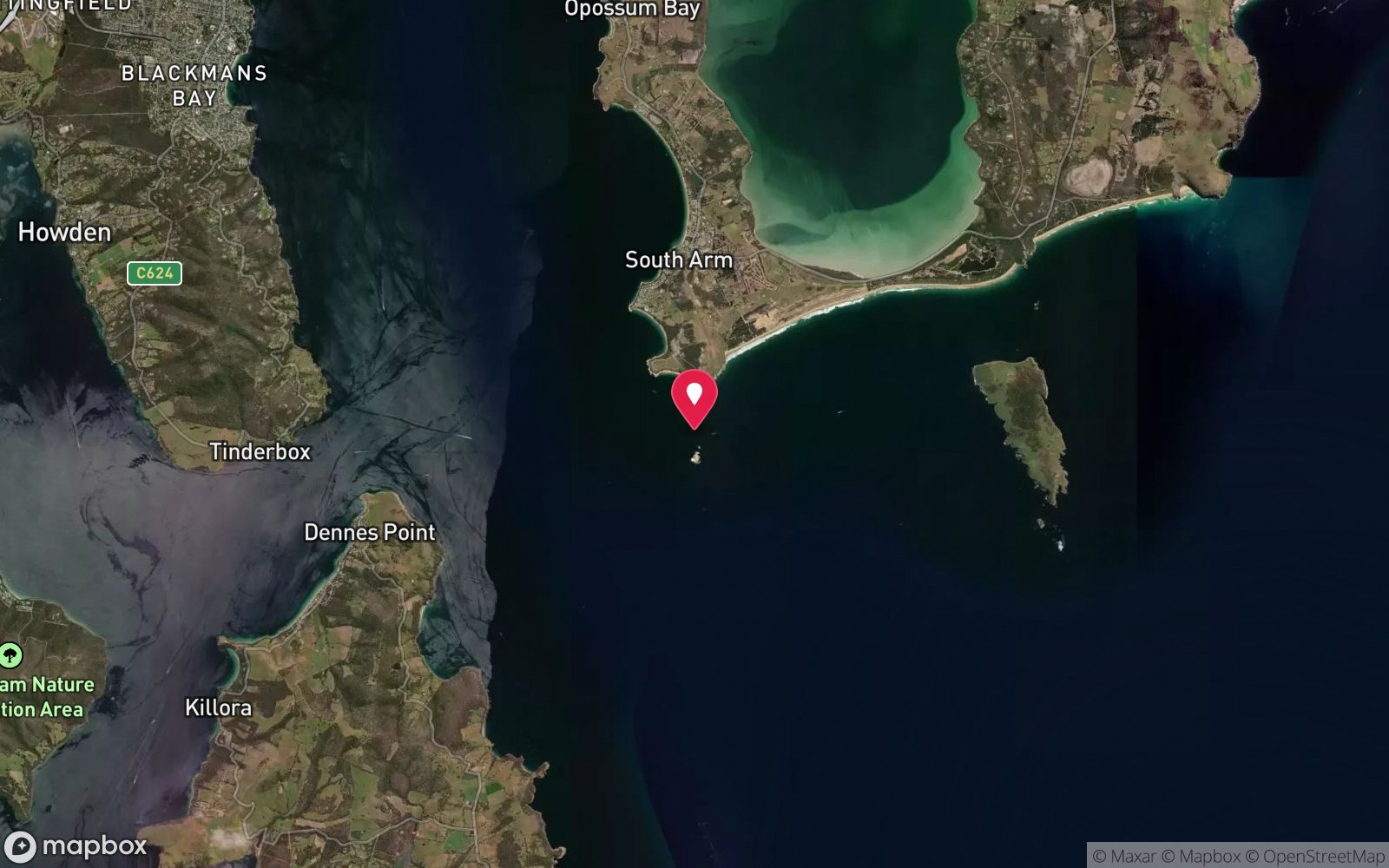
No published coordinates. The map above shows the general area, estimated from other documented sites near South Arm.
Primary source: marinelife.org.auMarine park & permits
Historic shipwreck (scuttled more than 75 years ago) – protected; do not remove material.
Nearest recompression chamber
Royal Hobart Hospital Hyperbaric Medicine Unit (Hobart CBD); DAN emergency hotline 1800 088 200
Diving emergency: call 000, then DAN AP 1800 088 200.
Trip planner
Build a trip around SS Musgrave (Betsey Island) →
A day-by-day plan for Hobart & Derwent with this site locked in.
This guide is a planning aid. Conditions change daily — confirm with a local dive centre and dive within your training. Data & safety notes.
Dive profile
How this site rates
Scores are computed from the recorded data, not opinions. How?
At a glance
SS Musgrave (Betsey Island) is a wreck boat dive in Hobart & Derwent, TAS, 30–34 m, suited to Deep/Advanced + experience divers, about 18 minutes by boat.
Rated advanced because of depth to 34 m, boat traffic overhead, cold water.
Why dive here
- The graveyard's deepest wreck – an anemone-encrusted 1883 stern with its steering quadrant at 34 m.
- Sunk in 1930; protected as underwater cultural heritage, so look but do not touch.
- Rarely dived: expect to have the site to yourself, and plan your own logistics.
Conditions to avoid
- Strong southerly or south-east swell and wind
- Outgoing tide or run-off after rain (poor visibility)
About SS Musgrave (Betsey Island)
The Betsey Island graveyard, west of Little Betsey Island at the mouth of the Derwent, is Hobart's ships' graveyard: from the 1930s to the 1980s obsolete vessels, barges and sections of the old floating bridge were towed here and scuttled in about 20-34 m. The Marine Life Network guide calls it a huge concentration of wreck dives very close to Hobart, with a pebble-and-mud bottom that stirs up easily, poor visibility after bad weather or decaying Storm Bay swell, and massive yellow and white jewel anemones and, at times, hordes of school fish on the wrecks. The Musgrave is the deepest of the graveyard wrecks, lying at 34 m slightly west of the Leura.
Built in Glasgow in 1883 as the Fiona, she was later renamed Musgrave and was scuttled at Betsey Island in 1930. The guide gives her tonnage as 817 and length as 211 ft (64 m). She is heavily broken up and shows only a weak trace on a sounder, making her hard to find, but the stern section survives, encrusted in jewel anemones and with a prominent steering quadrant.
The depth, cold and low light make this a more serious dive than the other graveyard wrecks: at 34 m on air bottom time is short, narcosis is noticeable in dark water, and a torch is essential. The reward is an old steamer's stern glowing with anemones and the satisfaction of finding a rarely visited wreck. Fish life is similar to the Leura, with small schooling fish and leatherjackets around the structure.
Divers should be Deep-certified and experienced in low-visibility conditions, and use a shot line for descent and ascent. Nitrox is not helpful at this depth for bottom time beyond small gains; a conservative air or EAN28 plan with a long safety stop is typical. As a wreck scuttled more than 75 years ago, she is protected historic heritage.
Wreck details
Iron steamer, 211 ft (64 m), 817 tons (Glasgow, 1883, ex-Fiona) · Sunk 1930 · Protected historic shipwreck
Era: early 20th century. Oldest wrecks · Wartime wrecks · Scuttled warships
Other wrecks of the same era
- Otago Hulk (Otago Bay) · Max 3 m · Hobart & Derwent
- SS Lintrose · Max 5 m · Hobart & Derwent
- SS Leura (Betsey Island) · Max 22 m · Hobart & Derwent
- SS Karitane (Squally Cove) · Depth not published · Kent Group
- Auriga · Max 57 m · Port Phillip Heads
- J7 Submarine (Sandringham) · Max 3 m · Melbourne & Port Phillip Bay
Getting there & entry
Broken remains of the 1883 Glasgow-built steamer Musgrave (ex-Fiona), scuttled in 1930 in 34 m, slightly west of the Leura – the deepest wreck in the Betsey Island graveyard.
South Arm is about 35 km (40 minutes) south-east of Hobart: cross the Tasman Bridge, follow the South Arm Highway (B33) through Rokeby and Lauderdale to South Arm. The main boat ramp is at South Arm (Blessington Street/Harbour area) with trailer parking and toilets; Lauderdale (Doran's Road) is an alternative ramp further north. From South Arm the Betsey Island graveyard lies about 5-6 km south-east across the mouth of the Derwent, west of Little Betsey Island, roughly 15-20 minutes by boat.
The Marine Life Network guide recommends an echo sounder to locate the individual wrecks, which are low on the bottom; there are no public moorings, so anchor carefully in the pebble-mud bottom off the wreck and leave a boat attendant.
Entry: Back roll or giant stride from charter boat
Facilities: South Arm and Lauderdale boat ramps; fills in Hobart.
Weather, swell & tides
Betsey Island lies at the mouth of the Derwent where it meets Storm Bay, so decaying southerly swell and strong southerly or south-westerly winds make the ride rough and stir up the pebble-and-mud bottom. The Marine Life Network notes the graveyard is not renowned for visibility and recommends calm, dry weather and an ebb tide, when clearer water sits over the wrecks. After Derwent floods the water can be very dark.
Northerly and light westerly winds give the best conditions; late summer and autumn are most reliable. Expect 3-8 m visibility at best, often less.
Best season: Late summer to autumn (February-May) for settled weather and best visibility; diveable year-round between fronts
How the dive is usually run
Shot the stern section, descend directly to the steering quadrant at 34 m, spend a short planned bottom time around the stern, and ascend on the shot with a generous safety stop.
Marine life
- Jewel anemones
- small schooling fish
- leatherjackets
- crabs
Linked species have their own page listing every site where they are recorded. All marine life →
Training required
The recreational limit. Operators expect a Deep Diver specialty or Advanced plus a log of similar dives, and most recommend nitrox.
This is a deep dive: plan gas, bottom time and a safety stop accordingly, and consider nitrox.
Courses that help here
- Enriched Air Nitrox – Longer no-decompression time at 25 m and deeper.
- Deep Diver – The site reaches 34 m.
- Drysuit Diver – Cold water; locals dive dry for much of the year.
- Peak Performance Buoyancy – Silt and low visibility punish poor trim.
Depth tiers: 0–10 m easy · to 18 m Open Water · 18–30 m Advanced (25 m+ is a deep dive) · 30–40 m Deep specialty · 40 m+ technical. All courses
Hazards & warnings
Depth 34 m in dark, cold water – narcosis and short no-deco limits; hard to locate; low visibility; boat traffic.
Technical notes
Deep Specialty recommended; shot line essential; plan conservative no-deco or light deco; redundant torches.
Dive centres that go here
No scheduled operator trips; Hobart clubs (Tasmanian Scuba Diving Club and others) and private boats from South Arm and Lauderdale. The Dive Shop Hobart and Go Dive Tasmania can advise.
Operators recorded for SS Musgrave (Betsey Island)
Other dive centres in Hobart & Derwent
Tasmania Tech and Dive Centre
ProfiledHobart & Derwent · TAS
The Tasmanian operation most clearly associated with technical diving services, spanning recreational and technical training with technical gas support.
Tasmanian Divers North
ListedLaunceston · Tasmania North & North-West · TAS
A northern Tasmanian operation serving the Bass Strait coastline and local diving community.
tasdivers.com.au · (03) 6229 1020
Tasmanian Divers South
ListedKingston · Hobart & Derwent · TAS
A southern Tasmanian operation serving the Hobart region and surrounding diving.
tasdivers.com.au · (03) 6229 1020
The Dive Shop Hobart
ListedHobart · Hobart & Derwent · TAS
A Hobart equipment and service business supporting local cold-water divers.
thediveshophobart.com.au · (03) 6234 3428
Underwater Adventures Tasmania
Reported closedBattery Point · Bruny Island & D'Entrecasteaux Channel · TAS
Reported permanently closed on Tripadvisor; last reviews 2013; formerly ran from Battery Point jetty (underwateradventures.com.au).
General area
No position has been published for SS Musgrave (Betsey Island). The circle shows where it is likely to be, worked out from other documented sites near South Arm. Ask a local operator for the exact site.
Dashed circle: general area (about 7 km), from other documented sites near South Arm. 6 pinned sites. Pins marked approximate on their pages show the general area only; not for navigation.
SS Musgrave (Betsey Island): frequently asked questions
How deep is SS Musgrave (Betsey Island)?
SS Musgrave (Betsey Island) reaches a maximum depth of 34 m, with the shallowest part at about 30 m; most of the dive is spent around 33 m.
What certification do I need to dive SS Musgrave (Betsey Island)?
Deep/Advanced + experience is the recommended minimum. This is a deep dive: plan gas, bottom time and a safety stop accordingly, and consider nitrox. Rated advanced because of depth to 34 m, boat traffic overhead, cold water.
Can I shore dive SS Musgrave (Betsey Island)?
No, it is reached by boat (about 18 minutes). A dive centre is required: boat access only.
When is the best time to dive SS Musgrave (Betsey Island)?
Late summer to autumn (February-May) for settled weather and best visibility; diveable year-round between fronts.
What marine life will I see at SS Musgrave (Betsey Island)?
Regularly recorded: Jewel anemones, small schooling fish, leatherjackets, crabs.
What wetsuit do I need at SS Musgrave (Betsey Island)?
Drysuit strongly recommended year-round; 7 mm semi-dry or two-piece 7 mm wetsuit with hood and gloves is the minimum in summer.
How cold is the water at SS Musgrave (Betsey Island)?
Typically 14-18 °C in summer and 9-12 °C in winter.
What are the main hazards at SS Musgrave (Betsey Island)?
Depth 34 m in dark, cold water – narcosis and short no-deco limits; hard to locate; low visibility; boat traffic. See the hazards section above for the full list.
Where is the nearest recompression chamber to SS Musgrave (Betsey Island)?
Royal Hobart Hospital Hyperbaric Medicine Unit (Hobart CBD); DAN emergency hotline 1800 088 200. In an emergency call 000, then DAN Asia-Pacific on 1800 088 200.
Diving in Hobart & Derwent
Hobart has the Tinderbox Marine Reserve, with its snorkel trail, weedy seadragons and easy shore access, the Derwent's wrecks and the Alma dredge, the Blackmans Bay and Kingston reefs, and the Iron Pot at the river mouth. Water is 11–17 °C and visibility improves quickly downstream of the city.
Getting there: All within 30–40 minutes of the city with shore entries; Hobart dive shops run charters and hire drysuits.
Sources
Data confidence: Low · Being verified: Positions not published; located by sounder. Single older source.. Last updated September 2026. Know this site better? How to send a correction