Dive slate · divesites.com.au · printed 8 Nov 2026
Loch Ard
Shipwreck Coast & Warrnambool, Victoria · near Port Campbell
| Depth | 10–25 m |
|---|---|
| Minimum level | Advanced Open Water |
| Difficulty | Advanced |
| Access | Boat |
| Entry | Negative entry from a small boat held off the island; the boat must stand off in the backwash |
| Current | Moderate |
| Visibility | 5-15 m |
| Water | summer 16-19 °C, winter 11-14 °C |
| Suit | 7mm semi-dry with hood and gloves in summer; drysuit strongly preferred May–November |
| Best season | March, April and May – the autumn calm is the only reliable window |
| Bottom time | 35 min |
| Position | -38.65011, 143.06204 (GPS) |
| Permit | Twelve Apostles Marine National Park – no take; protected historic shipwreck (Heritage Act 2017) – no disturbance. Boat launching via the jetty crane requires a Parks Victoria licence. |
| Nearest chamber | The Alfred (Melbourne) |
| Emergency | 000 · DAN Asia-Pacific diving emergency 1800 088 200 |
Loch Ard
Also known as Loch Ard wreck, Mutton Bird Island
Victoria's most famous shipwreck: bow, plating with deadeyes, railway iron and cargo under the cliffs of Mutton Bird Island, dived on a dozen autumn days a year.
Near Port Campbell · Shipwreck Coast & Warrnambool, Victoria
- Depth
- 10–25 m
- Minimum level
- Advanced Open Water
- Access
- Boat
- Boat ride
- ~20 min
- Water
- 16-19 °C
- Visibility
- 5-15 m
Loch Ard10–25 m · Advanced Open Water
Dive factsDepths, conditions, location & safety
Season
Off-peak nowBest months: March, April, May.
March, April and May – the autumn calm is the only reliable window
- Best months
- Now (November)
Dive facts
- Depth
- 10–25 m
- Typical depth
- 18 m
- Certification
- Advanced Open Water
- Difficulty
- Advanced
- Depth tier
- Advanced Open Water (18–30 m)
- Access
- Boat
- Offshore
- 0.3 km
- Dive centre needed
- Yes – boat access only
- Shore / independent
- No
- Boat ride
- ~20 min
- Current
- Moderate
- Visibility
- 5-15 m
- Water temp (summer)
- 16-19 °C
- Water temp (winter)
- 11-14 °C
- Water
- Temperate
- Bottom time
- 35 min
- Dive traffic
- Rarely dived (private boat/club only)
- Night dive
- No
- Snorkel friendly
- No
Exposure suit
7mm semi-dry with hood and gloves in summer; drysuit strongly preferred May–November
Location
Mutton Bird Island / Twelve Apostles Marine National Park · Shipwreck Coast – Port Campbell
-38.65011, 143.06204
Published GPS position.
Open in Google MapsPrimary source: scubadoctor.com.auMarine park & permits
Twelve Apostles Marine National Park – no take; protected historic shipwreck (Heritage Act 2017) – no disturbance. Boat launching via the jetty crane requires a Parks Victoria licence.
Nearest recompression chamber
The Alfred (Melbourne)
Diving emergency: call 000, then DAN AP 1800 088 200.
Trip planner
Build a trip around Loch Ard →
A day-by-day plan for Shipwreck Coast & Warrnambool with this site locked in.
This guide is a planning aid. Conditions change daily — confirm with a local dive centre and dive within your training. Data & safety notes.
Dive profile
How this site rates
Scores are computed from the recorded data, not opinions. How?
At a glance
Loch Ard is a wreck boat dive in Shipwreck Coast & Warrnambool, VIC, 10–25 m, suited to Advanced Open Water divers, moderate current, about 20 minutes by boat.
Rated advanced because of depth beyond 18 m, surge on the entry or in the shallows, cold water.
Why dive here
- Victoria's most famous shipwreck: bow, plating with deadeyes, railway iron and cargo under the cliffs of Mutton Bird Island, dived on a dozen autumn days a year.
- Sunk in 1878 (Three-masted iron clipper, 1,693 GRT, 80.4 m (263.7 ft)); protected as underwater cultural heritage, so look but do not touch.
- Rarely dived: expect to have the site to yourself, and plan your own logistics.
About Loch Ard
The Loch Ard is Victoria's most famous shipwreck. A three-masted iron clipper of 1,693 tons, built by Barclay Curle in Glasgow in 1873 for the Loch Line, she left Gravesend for Melbourne on 2 March 1878 with 54 passengers and crew under Captain George Gibb. In fog before dawn on 1 June, on what should have been the last day of the voyage, she found herself under the cliffs east of Port Campbell; she struck Mutton Bird Island and sank within fifteen minutes. Only two survived – the apprentice Tom Pearce, who was washed into the gorge that now bears the ship's name, and the passenger Eva Carmichael, whom he swam out to rescue. Fifty-two died and few bodies were recovered; four are buried in the cemetery above the gorge. Cargo washed ashore for weeks, including the famous Minton porcelain peacock now in Flagstaff Hill museum, and the wreck was heavily salvaged in the 1970s before protection.
The wreck lies against the western and southern base of Mutton Bird Island in 10–25 m, and it is a large, scattered site. The bow section is the most coherent piece, relatively intact with the bowsprit jammed under a rock, and a long line of hull plating with deadeyes still attached runs from it along the base of the cliff. Where the hull leans against the island it has formed a cave that divers can look into. Railway irons from the cargo lie concreted to hull sections, and the sand and gullies hold rolls of lead and zinc sheet, ceramics, pewter mugs, ink wells, lead shot and bottle fragments. The stern has never been found and is assumed to have broken up. One anchor was raised for the 1978 centenary and stands at the Port Campbell visitor centre. Marine life on the site is rich – the island's cliffs carry sponges and kelp, crayfish shelter in the plating and schools of sweep and salmon work the water column – but the artefacts and the setting are the point. It is a demanding, rarely possible dive for experienced divers who can handle surge and a hostile boat pick-up, and a genuinely important one: an archaeologically and recreationally significant site inside the Twelve Apostles Marine National Park where nothing may be touched.
Wreck details
Three-masted iron clipper, 1,693 GRT, 80.4 m (263.7 ft) · Sunk 1878 · Protected historic shipwreck
Era: colonial sail and steam. Oldest wrecks · Wartime wrecks · Scuttled warships
Other wrecks of the same era
- Napier · Max 8 m · Shipwreck Coast & Warrnambool
- Eliza Ramsden · Max 22 m · Port Phillip Heads
- George Roper · Max 6 m · Port Phillip Heads
- SS Barwon & Horseshoe Reef, Cape Bridgewater · Max 8 m · Portland & the West
- SS Gulf of Carpentaria · Max 50 m · Wilsons Promontory
- Glaneuse · Max 6 m · Port Phillip Heads
Getting there & entry
Iron clipper wrecked in 1878 at the base of Mutton Bird Island, immediately south of Loch Ard Gorge and 5 km south-east of Port Campbell, in 10–25 m.
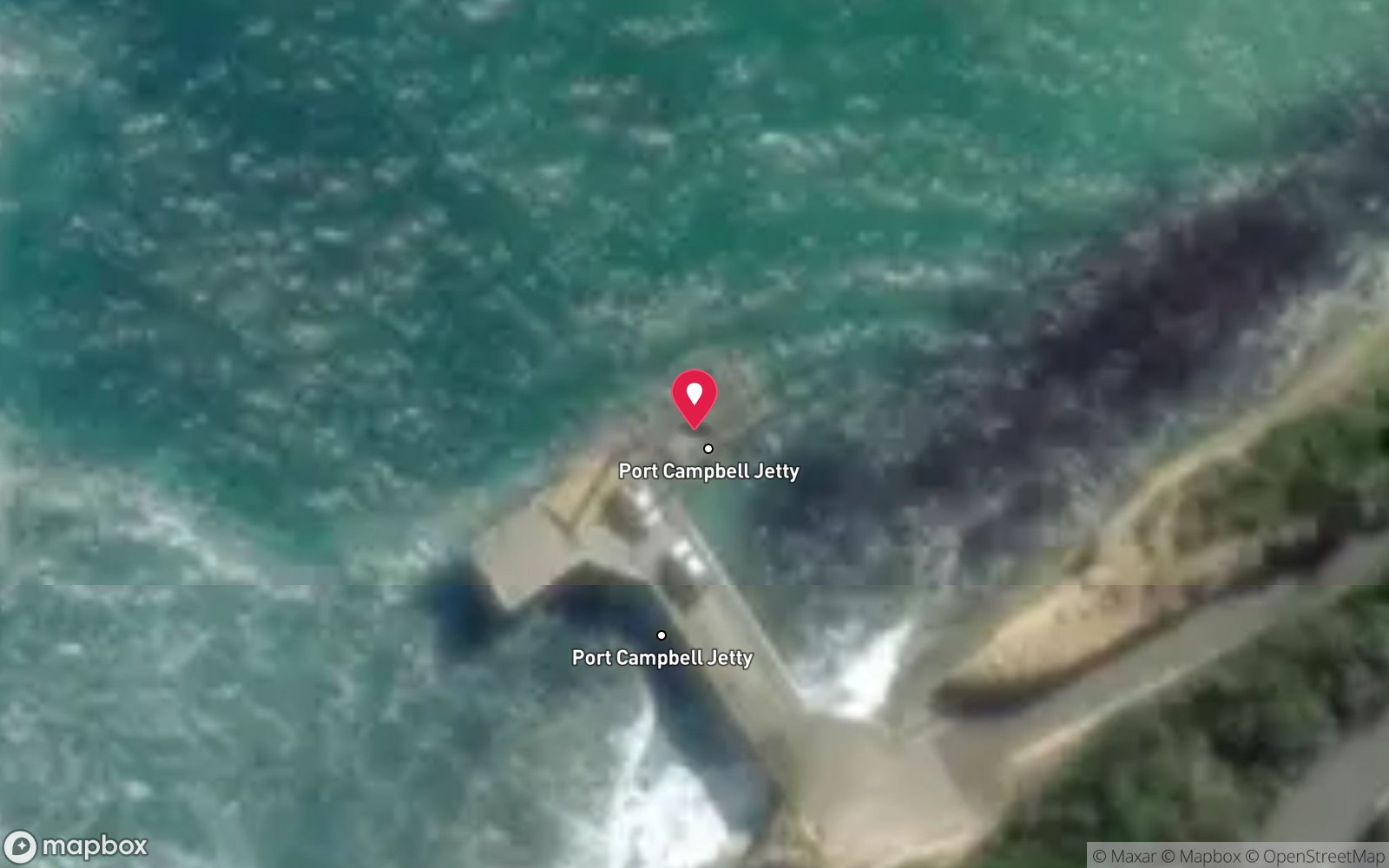
Boat only, and only from Port Campbell. Small boats are launched by the crane on Port Campbell jetty, which is restricted to licensed permit holders (contact Parks Victoria, 13 1963), or by local charter operators who hold a permit. From the jetty it is about 5 km east along the cliffs, 15–20 minutes in a fast boat, taking care to avoid the wave break east of the inlet entrance.
The wreck lies against the seaward and western side of Mutton Bird Island; the boat stands off in the backwash while divers drop. Do not attempt to reach the site from Loch Ard Gorge by swimming – it is far too dangerous. Warrnambool (60 km) is the nearest dive shop.
Entry: Negative entry from a small boat held off the island; the boat must stand off in the backwash
Facilities: Port Campbell jetty crane (permit holders), Port Campbell township with toilets, cafes, visitor centre and fuel; no air fills in Port Campbell – nearest Warrnambool.
Weather, swell & tides
The Scuba Doctor is explicit: diving on the Loch Ard requires calm conditions and a very low swell, and March to May give the best odds. Mutton Bird Island stands in the open Southern Ocean and the backwash off its cliffs can be severe even on calm days, so the working limit is a swell under about 1 m from the south-west with light northerly winds; anything more and the site is a cauldron. Weather on the Great South West Coast changes quickly and a calm morning can be undiveable by early afternoon, so dive early.
The inlet entrance at Port Campbell also breaks in a swell, which can close the launch site even when the wreck is workable. Realistically a dozen days a year.
Best season: March, April and May – the autumn calm is the only reliable window
If it's blown out
Sheltered or shore sites within 25 km that often work when Loch Ard doesn't.
- Port Campbell Jetty · 7 km · Max 8 m
- Port Campbell Bay · 7 km · Max 12 m
- Napier · 7 km · Max 8 m
- Newfield · 14 km · Max 7 m
How the dive is usually run
Drop from the boat close under the island and descend quickly to the bottom in 15–20 m to get below the surge. Work along the base of the cliff where hull plating, railway iron and the bow section lie, look into the cave formed where the hull leans against the island, and check the sand edge at 20–25 m for cargo. Turn at a third of your gas, ascend the cliff face to a safety stop in the lee if the surge allows, and surface with an SMB for the boat to pick you up away from the rocks.
Marine life
- Southern rock lobster in the plating
- sea sweep and Australian salmon schools
- blue-throat wrasse
- magpie perch
- zebrafish
- sponges and kelp on the island walls
- occasional Australian fur seals →
- short-tailed shearwaters nesting on the island above
Linked species have their own page listing every site where they are recorded. All marine life →
Training required
Beyond 18 m an Advanced certification (which includes a deep dive to 30 m) is the accepted minimum. Anything past 25 m is a deep dive in practice.
Courses that help here
- Cavern Diver – An overhead environment.
- Drysuit Diver – Cold water; locals dive dry for much of the year.
Depth tiers: 0–10 m easy · to 18 m Open Water · 18–30 m Advanced (25 m+ is a deep dive) · 30–40 m Deep specialty · 40 m+ technical. All courses
Hazards & warnings
Severe backwash and surge off the island even on calm days; exposed Southern Ocean site; difficult boat pick-up close to cliffs; launch restricted to permit holders; rapidly changing weather; depth to 25 m; sharp plating; no artefact removal under any circumstances – protected historic shipwreck within a marine national park.
Dive centres that go here
No regular charter. Port Campbell Boat Charters and local fishing charters take experienced divers on request on calm days; Warrnambool Diving and Melbourne clubs organise occasional trips, typically in March–May. Expect to wait for weather.
Operators recorded for Loch Ard
Warrnambool Diving
Named by sitesWarrnambool · Shipwreck Coast & Warrnambool · VIC
Trades as Warrnambool Diving & Firearms.
divingandfirearms.com.au · (03) 5562 1685
Port Campbell Boat Charters
Named by sitesPort Campbell · Shipwreck Coast & Warrnambool · VIC
Listed at 32 Lord St Port Campbell offering scenic, fishing, snorkelling and diving trips; a listing says tours were suspended for pier maintenance and current status is unconfirmed.
portcampbellboatcharters.com.au · 0428 986 366
Other dive centres in Shipwreck Coast & Warrnambool
Map
7 pinned sites. Pins marked approximate on their pages show the general area only; not for navigation.
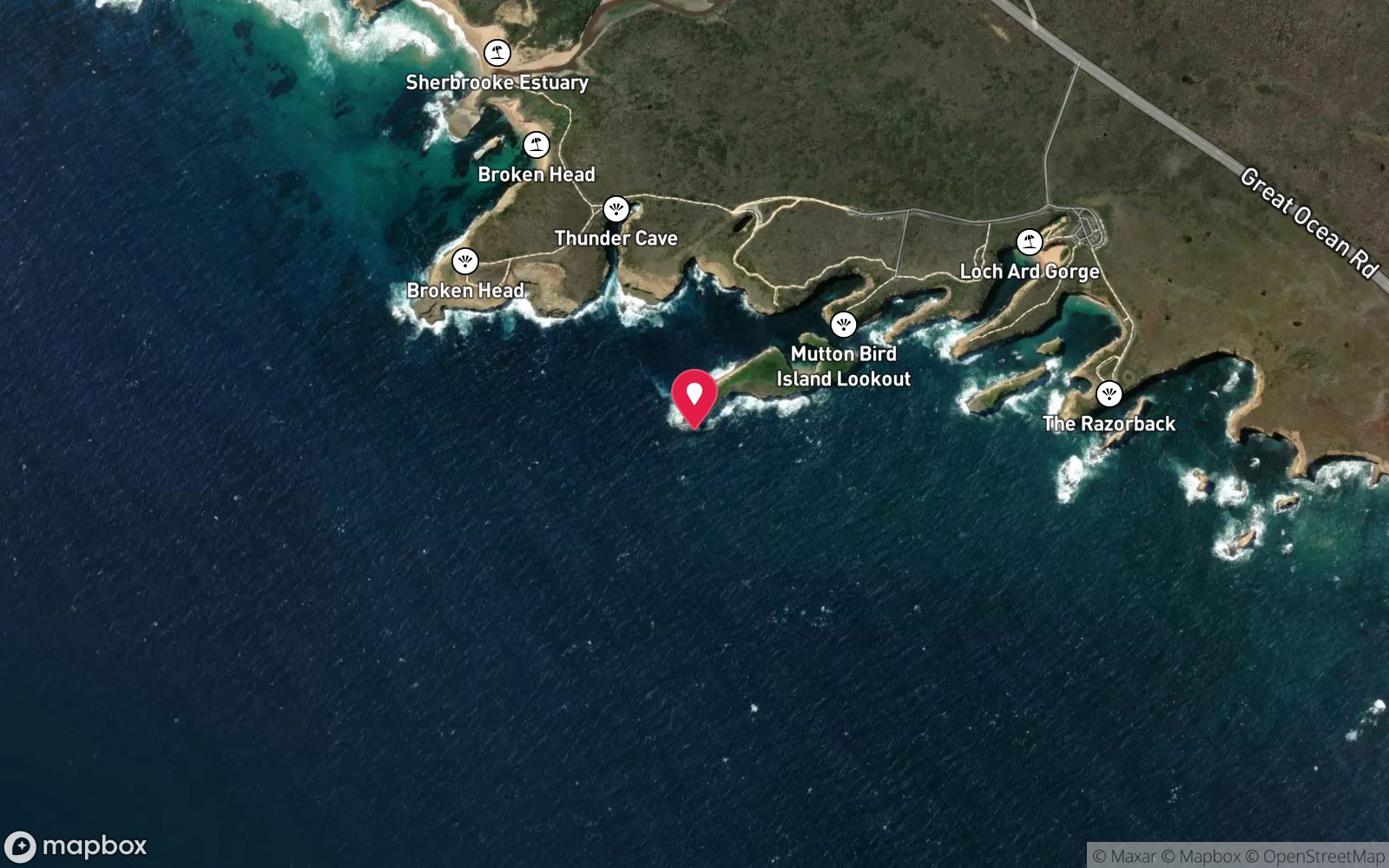
Satellite views
Loch Ard: frequently asked questions
How deep is Loch Ard?
Loch Ard reaches a maximum depth of 25 m, with the shallowest part at about 10 m; most of the dive is spent around 18 m.
What certification do I need to dive Loch Ard?
Advanced Open Water is the recommended minimum. Rated advanced because of depth beyond 18 m, surge on the entry or in the shallows, cold water.
Can I shore dive Loch Ard?
No, it is reached by boat (about 20 minutes). A dive centre is required: boat access only.
When is the best time to dive Loch Ard?
March, April and May – the autumn calm is the only reliable window.
What marine life will I see at Loch Ard?
Regularly recorded: Southern rock lobster in the plating, sea sweep and Australian salmon schools, blue-throat wrasse, magpie perch, zebrafish, sponges and kelp on the island walls, occasional Australian fur seals, short-tailed shearwaters nesting on the island above.
What wetsuit do I need at Loch Ard?
7mm semi-dry with hood and gloves in summer; drysuit strongly preferred May–November.
How cold is the water at Loch Ard?
Typically 16-19 °C in summer and 11-14 °C in winter.
What are the main hazards at Loch Ard?
Severe backwash and surge off the island even on calm days; exposed Southern Ocean site; difficult boat pick-up close to cliffs; launch restricted to permit holders; rapidly changing weather; depth to 25 m; sharp plating; no artefact removal under any circumstances – protected historic shipwreck within a marine national park. See the hazards section above for the full list.
Where is the nearest recompression chamber to Loch Ard?
The Alfred (Melbourne). In an emergency call 000, then DAN Asia-Pacific on 1800 088 200.
Diving in Shipwreck Coast & Warrnambool
The coast between Cape Otway and Port Fairy earned its name honestly: the Loch Ard, the Falls of Halladale, the Schomberg and dozens of others lie in the shallows below the limestone cliffs. Warrnambool's Breakwater, Port Fairy's Griffiths Island and the Lady Bay reefs are dived on the rare days of nil swell, and Julia Percy Island has fur seals.
Getting there: Three to four hours west of Melbourne along the Great Ocean Road. Shore dives at Warrnambool and Port Fairy; local club boat dives.
All Shipwreck Coast & Warrnambool dive sites and a suggested itinerary →
Sources
- scubadoctor.com.au/divesite.htm?site=Loch-Ard
- parks.vic.gov.au/places-to-see/parks/twelve-apostles-marine-national-park
- scubadoctor.com.au/west-coast-shipwreck-trail.htm
- en.wikipedia.org/wiki/Loch_Ard_(ship)
Data confidence: Medium · Being verified: v1 stated a Heritage Victoria protected-zone permit; the current Scuba Doctor page and Heritage Victoria list the wreck as protected within the marine national park but not as a declared protected zone – confirm before publishing. Charter availability.. Last updated September 2026. Know this site better? How to send a correction
Nearby dive sites
More wrecks in Victoria
Explore more
This region
Similar dives
Marine life